
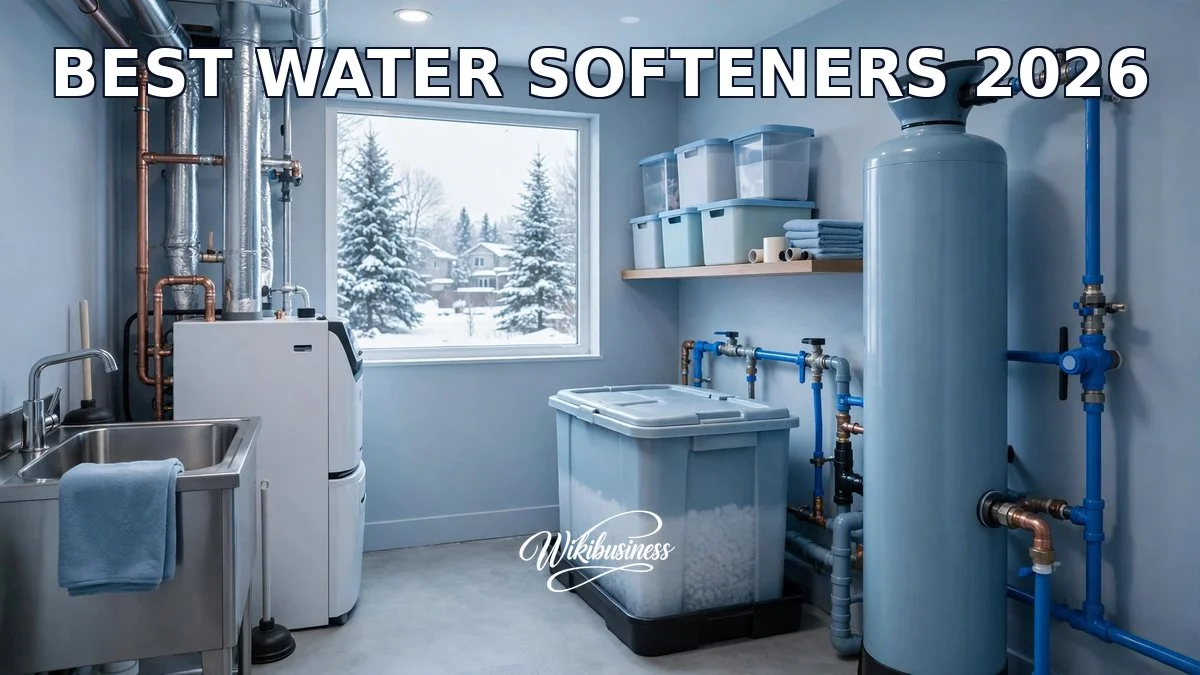
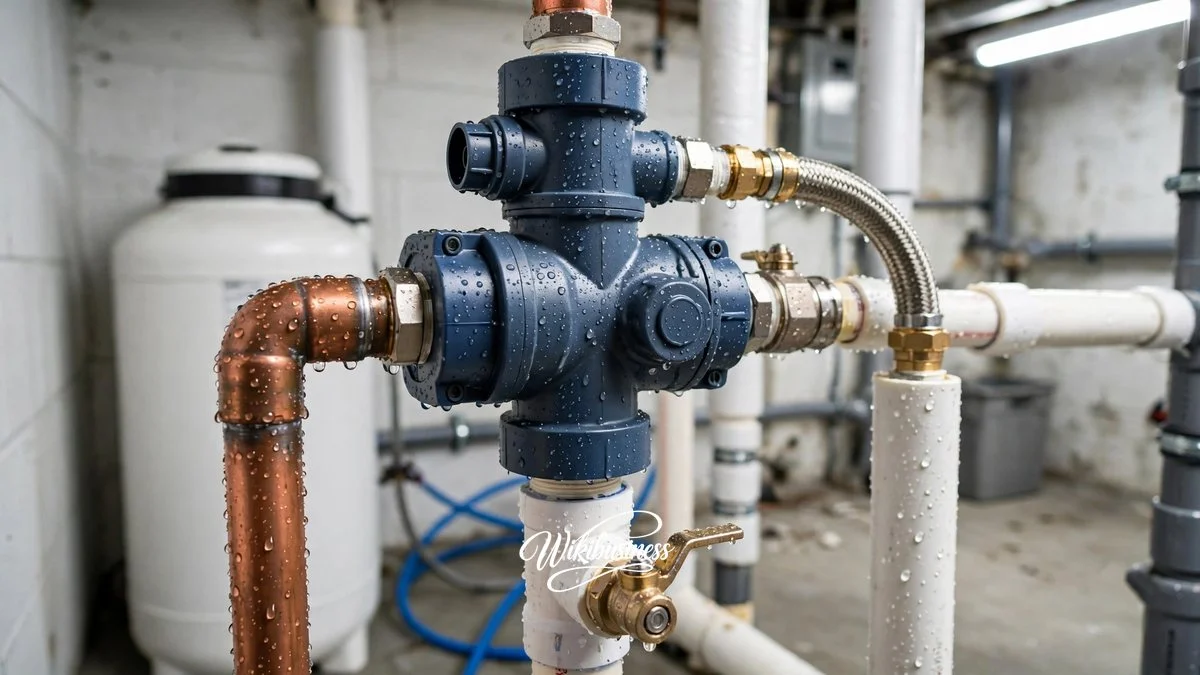
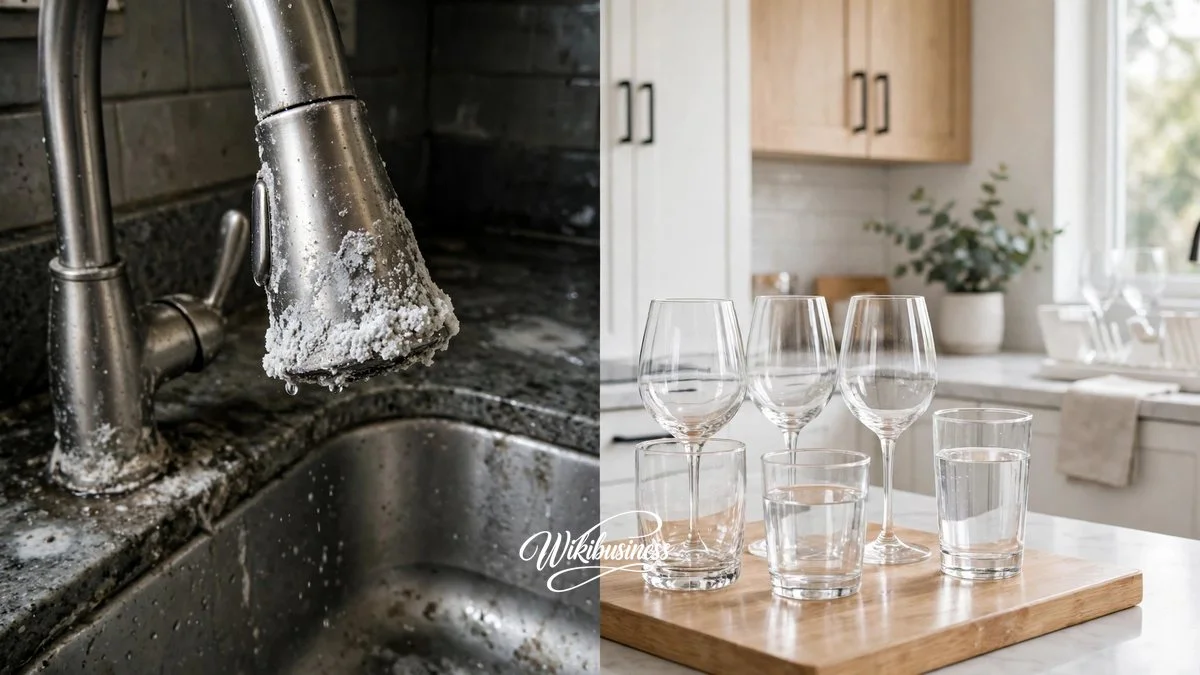
Hard water quietly taxes almost everything in a Canadian home: scale in the water heater, spots on glassware, stiff laundry, dry skin and appliances that die years early. Choosing among the best water softeners 2026 is not about chasing the biggest grain number on a box. It is about matching capacity, regeneration style and flow rate to your household, your water hardness and your plumbing. This guide to the best water softeners 2026 explains the science first, then ranks six proven systems for small condos, family homes and very hard well water.
What Hard Water Actually Does
Hardness is dissolved calcium and magnesium, measured in grains per gallon. Above roughly 7 grains, most households notice scale; above 15 grains, water heaters, dishwashers and tankless units accumulate it fast. A true softener removes those minerals by ion exchange: water passes through resin beads charged with sodium, the calcium and magnesium swap places, and a periodic regeneration flushes the minerals to drain with brine from a salt tank. That is why the best water softeners 2026 are all salt-based ion-exchange systems at the top of this list, with electronic descalers included only as a low-maintenance alternative that conditions water without truly softening it. If you are comparing the best water softeners 2026 for a home on municipal water in Toronto, Calgary or Winnipeg, hardness varies widely by city and even by season, so test first with a strip or a lab sample before sizing.
How to Size a Softener Correctly
Sizing uses a simple formula: people in the home multiplied by about 75 gallons per day, multiplied by your hardness in grains, gives the grains that must be removed daily. A family of four at 15 grains needs roughly 4,500 grains a day, so a 32,000 to 48,000 grain unit regenerating every six to eight days is the efficient sweet spot. Oversizing wastes salt and water; undersizing forces constant regeneration and breakthrough hardness on laundry day. Flow rate matters just as much: look for 10 to 15 gallons per minute of service flow so showers, a dishwasher and a washing machine can run together without a pressure drop. Every pick among the best water softeners 2026 below publishes both numbers, and the honest way to use this guide is to match those two numbers to your home before you compare prices.
1. GE GXSH40V — Best Overall for Most Family Homes
The GE GXSH40V is a 40,000 grain system with demand-initiated regeneration, meaning it meters actual water use and only regenerates when needed instead of on a blind timer. That saves salt across vacations and low-use weeks, and its flow and capacity suit three to five person homes on moderately hard municipal water. Installation is standard 1-inch plumbing with a bypass valve included in the design most plumbers expect.
Check the price in Canada — GE GXSH40V
2. Whirlpool WHES40E — Best Smart-Featured Pick
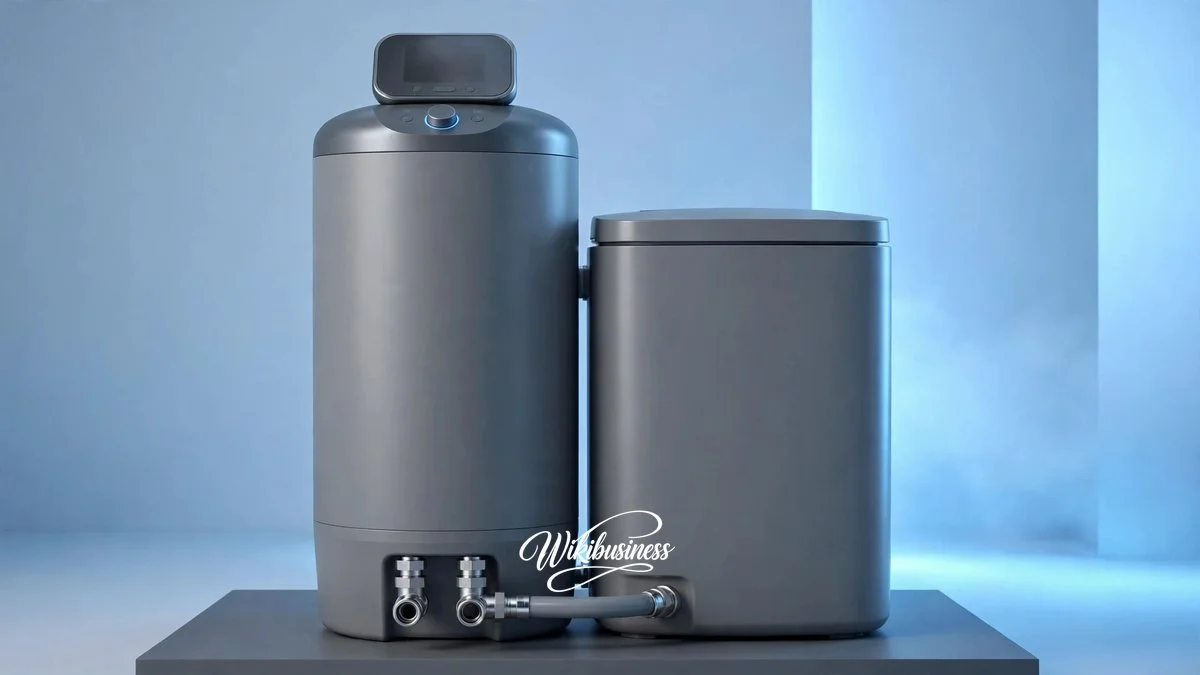
Whirlpool’s WHES40E, also rated around 40,000 grains, adds demand regeneration and a low-salt indicator in a single cabinet-style unit that fits tighter utility rooms. For households that want the best water softeners 2026 to be set-and-forget, that salt monitoring and a proven valve design are the appeal. It is a strong fit for four-person homes and pairs well with a sediment pre-filter on well water.
Check the price in Canada — Whirlpool WHES40E
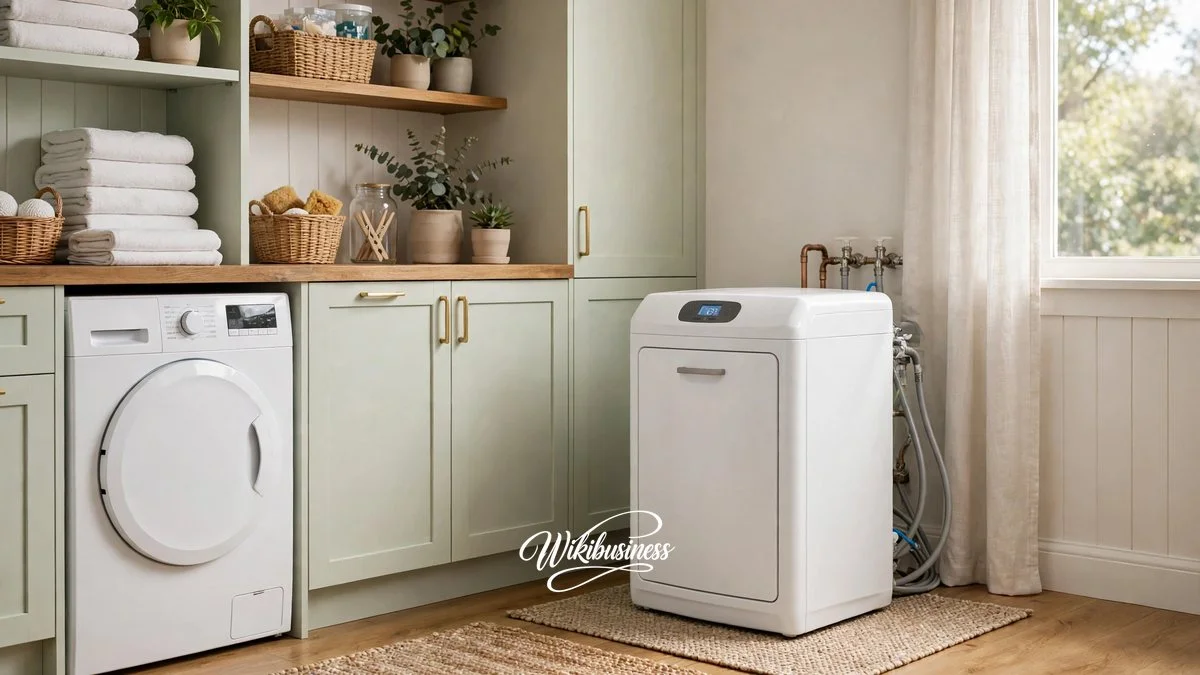
3. Fleck 5600SXT 48,000 Grain — Best for Very Hard and Well Water
The Fleck 5600SXT valve is the workhorse of the independent softener world: a digital metered control on a 48,000 grain resin tank, widely serviced and easy to program. For rural Canadian homes on wells with hardness above 20 grains, this is often the most durable answer among the best water softeners 2026, especially with an iron filter ahead of it when iron is also present. It is sold as a system you or a plumber installs once and services for a decade.
Check the price in Canada — Fleck 5600SXT 48K
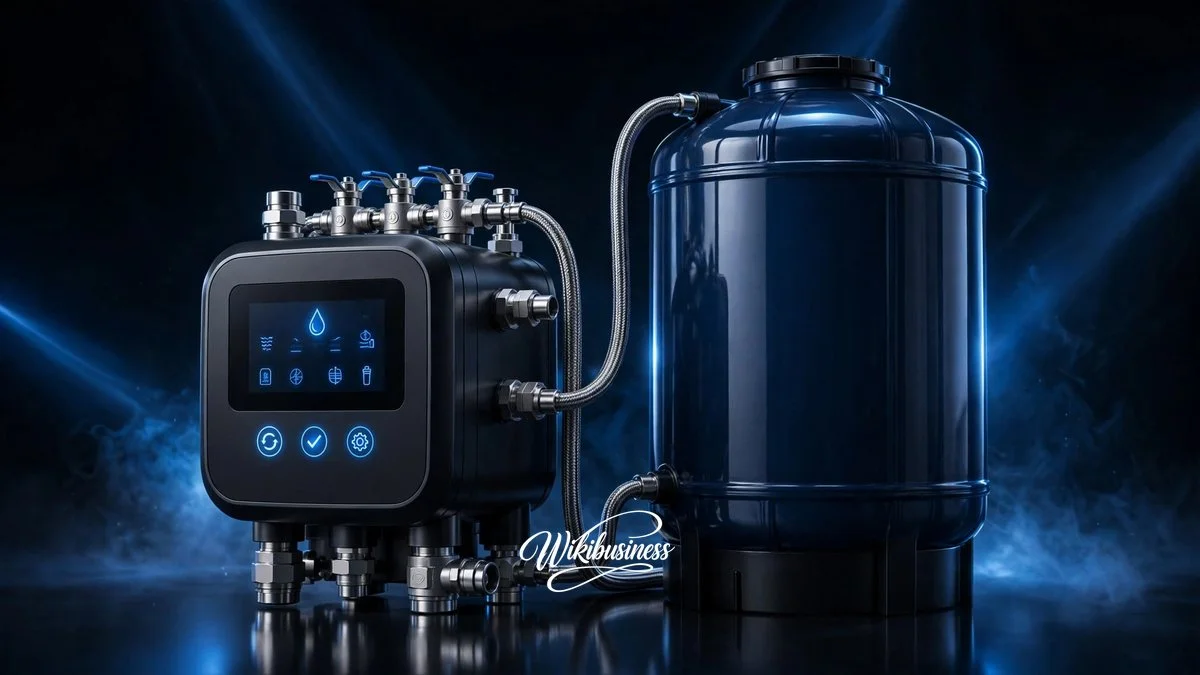
4. Aquasure Harmony 48,000 Grain — Best Value High Capacity
The Aquasure Harmony series offers 48,000 grains with a digital metered valve at a price that usually undercuts big-box brands. It suits larger families and homes with multiple bathrooms where peak flow matters. As with any value system, budget for quality installation fittings and a proper drain line; the resin and valve do the work, the install decides whether it stays leak-free.
Check the price in Canada — Aquasure Harmony 48K
5. Morton M34 System Saver — Best Compact Big-Box Option
Morton’s M34, around 34,000 grains, is a compact demand-regenerating unit aimed at smaller homes and cottages. It will not serve a five-bathroom house, but for one to three people it delivers genuine soft water with a small footprint and widely available salt and support. In a list of the best water softeners 2026, it is the sensible small-home entry rather than a compromise.
Check the price in Canada — Morton M34
6. iSpring ED2000 — Best Salt-Free Alternative
The iSpring ED2000 is not a softener: it is an electronic descaler that wraps coils around the incoming pipe and alters how scale crystals form, so less scale sticks. It does not remove calcium, does not change a hardness test, and needs no salt, drain or regeneration. Choose it only if you understand that trade-off — for renters and condo owners who cannot cut plumbing, it is the practical maintenance-free option, and it is included here transparently for exactly that case.
Check the price in Canada — iSpring ED2000
Salt, Maintenance and Running Costs
Expect to add salt every four to eight weeks depending on use, clean the brine tank yearly, and replace resin after roughly a decade on chlorinated city water. Running costs are modest — salt and a small amount of regeneration water — compared with the cost of a scaled-out tankless heater. If your home uses a septic system, discuss regeneration discharge with a local installer, and consider high-efficiency demand regeneration, which the top picks here already use. That long view is why the best water softeners 2026 pay back quietly, year after year, in appliance life rather than in any single dramatic saving.
FAQ — Best Water Softeners 2026
What size water softener does a family of four need? At typical hardness of 10 to 18 grains, a 32,000 to 48,000 grain demand-regenerating unit is the efficient range.
Do salt-free systems soften water? No. They condition water so scale sticks less, but they do not remove calcium and magnesium or change a hardness test.
Can I install a softener myself? A confident DIYer with plumbing experience can, using the bypass and drain connections; most homeowners hire a plumber for a clean, warrantied install.
Does soft water taste salty? No. The sodium added is small and soft water does not taste salty; many owners add a reverse-osmosis tap for drinking water regardless.
How do I know my hardness? Use a test strip for a quick reading or a lab test for an exact number before you buy — sizing depends on it.