

Every market cycle has a story investors tell themselves, and this cycle’s story is artificial intelligence. Getting AI stocks explained properly means ignoring the tickers for a moment and looking at the physical layer underneath: the chips, the cloud platforms and the data centres that turn electricity into intelligence. When you understand that stack, AI stocks explained stops being about hype and becomes a question of who sells the picks and shovels, who rents the ground, and who pays the power bill. This guide walks the whole AI infrastructure layer — with Nvidia at the centre — and shows what actually moves these stocks, quarter after quarter.
The AI Infrastructure Layer, From Silicon to Software
Think of AI as a five-layer stack. At the bottom sit the fabs — overwhelmingly TSMC in Taiwan — that etch transistors a few nanometres wide. Above them are the chip designers: Nvidia for GPUs, AMD as the challenger, and the hyperscalers’ own silicon teams at Google, Amazon and Microsoft. The third layer is the cloud: Microsoft Azure, Amazon AWS and Google Cloud buy chips by the hundreds of thousands and rent the compute out. The fourth layer is the data centre itself — land, power contracts, cooling, networking — and the fifth is the model and application layer the public actually sees. Money enters at the top, but pricing power concentrates at the bottom, because advanced chips are the one input nobody can substitute quickly. That single fact explains most of what follows whenever AI stocks explained is done honestly.

Nvidia: Why One Company Sits at the Centre
Nvidia’s dominance is not just fast chips. Its CUDA software platform, built over nearly two decades, is the language AI researchers already write in, and switching costs are measured in years of rewritten code, not dollars. Nvidia sells complete systems — GPU, networking from its Mellanox acquisition, and software — so a data centre operator buys an outcome, not a component. Gross margins above 70 percent, data centre revenue that has multiplied in three years, and a product cadence that now ships a new architecture roughly every year are why Nvidia is the reference point in any serious attempt to get AI stocks explained. The risks are equally concrete: customer concentration among a handful of hyperscalers, export controls on advanced chips to China, and the possibility that custom silicon from its own biggest customers erodes share at the margin. The best single book on how the company got here is The Nvidia Way by Tae Kim.
Chips: The Layer Where Scarcity Lives
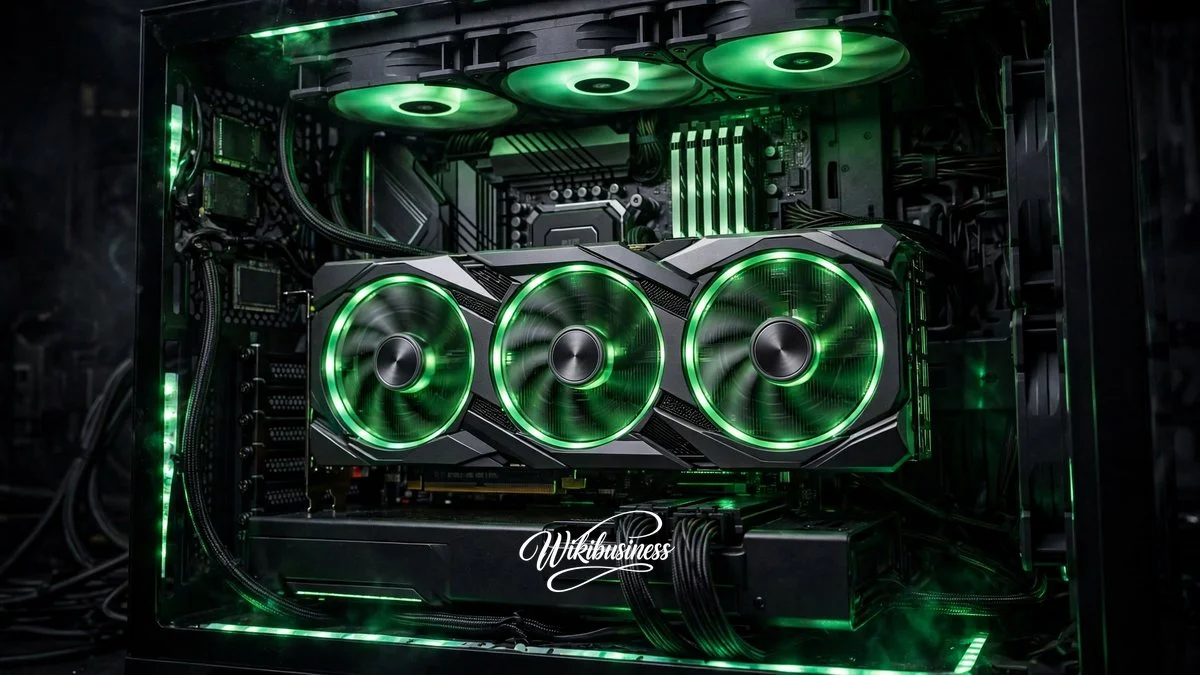
An AI accelerator is only as useful as the memory feeding it, which is why high-bandwidth memory from SK hynix, Samsung and Micron became a second chokepoint, and why advanced packaging capacity at TSMC sells out years ahead. This is the layer where geopolitics enters the portfolio: export controls, subsidies under the US CHIPS Act, and Taiwan concentration risk are not footnotes, they are central variables. Chris Miller’s Chip War remains the essential history of how semiconductors became the terrain of great-power competition, and no investor should form a view on AI stocks without it. For readers who want the hardware in their own hands, the same GPU architecture that trains models also drives the consumer cards gamers buy — the current-generation GeForce RTX cards are the accessible end of the exact same silicon story.

Cloud and Data Centres: Where the Capex Lands
The hyperscalers now commit capital expenditure at a scale once reserved for national infrastructure programmes — hundreds of billions of dollars a year across Microsoft, Amazon, Alphabet and Meta. That spending flows to chip vendors, to server makers, to electrical equipment, cooling and backup-power suppliers, and to the utilities that can actually deliver hundreds of megawatts to a single site. Power, not chips, is increasingly the binding constraint: grid connection queues, natural gas turbines and even restarted nuclear capacity have become AI stories. When analysts debate whether AI stocks are in a bubble, this is the number they are really debating — whether the revenue earned renting out all this compute will justify the capex curve. Watching hyperscaler capex guidance each earnings season tells you more about the next year of AI stocks explained than any product launch.
What Actually Moves AI Stocks
Five drivers recur. First, hyperscaler capex guidance: a raise lifts the whole supply chain within hours. Second, Nvidia’s earnings and, more importantly, its data centre outlook and comments on supply. Third, export-control headlines, which can cut a vendor’s addressable market overnight. Fourth, interest rates: AI leaders trade at multiples that assume years of growth, so discount-rate moves hit them first and hardest — the same macro sensitivity we track in our gold vs silver safe-haven guide and our Strait of Hormuz explained energy analysis. Fifth, evidence of real end-demand: enterprise AI revenue, inference volumes and software attach rates are what separate a durable build-out from a speculative one. Mustafa Suleyman’s The Coming Wave is the clearest account of why the technology itself keeps forcing the pace, while Ethan Mollick’s Co-Intelligence covers how the tools are actually being adopted inside organisations, and Kai-Fu Lee’s AI Superpowers frames the US–China race that sits behind the chip story.
How to Read the Cycle Without Chasing It
A disciplined approach treats the AI infrastructure layer as a supply chain to be mapped, not a lottery to be played. Separate the stack into its layers, note who has pricing power in each, and track the physical constraints — wafers, memory, packaging, megawatts — because those constraints are what earnings eventually obey. Valuations can run ahead of fundamentals for a long time in a genuine technology build-out; they did for railways, for fibre optics and for cloud. The investors who kept their footing in each case were the ones who could explain, in plain language, what the company sold and why a customer could not easily buy it elsewhere. That is the real test of AI stocks explained — not predicting a price, but understanding the machine. For deal timing on the hardware side, our Black Friday 2026 deals guide tracks the seasonal discounts worth watching.
FAQ — AI Stocks Explained
What are AI stocks, in simple terms?
Shares in companies that build or profit from artificial intelligence: chip designers like Nvidia and AMD, the fabs and memory makers that supply them, cloud platforms that rent out compute, and software firms selling AI products. The infrastructure layer — chips, cloud and data centres — captures most of the spending today.
Why is Nvidia so central to AI stocks?
Its GPUs are the standard training hardware, its CUDA software creates deep switching costs, and it sells complete AI systems rather than bare chips. Its earnings therefore act as a health check for the entire build-out.
What is the biggest risk to AI stocks?
The capex question: if the revenue from renting AI compute grows more slowly than the hundreds of billions being spent building data centres, returns on that investment disappoint and multiples compress. Export controls and power shortages are the next risks in line.
Is this financial advice?
No. This article explains how the AI infrastructure layer works and what drives the stocks; it is education, not a recommendation. Anyone investing should do their own research or speak to a licensed adviser.
AI stocks explained comes down to one sentence: follow the chips, the cloud contracts and the megawatts, and you will understand the share prices better than any headline can teach you.