
Astronomers Discover A Disappearing Space Object That Turns On And Off Every 20 Minutes And Sends Highly-Polarized Radio Signals

THE STORY
More stories ↓

[ad_1]

According to a research paper published in Nature, astronomers detected a “really weird” object 4,000 lightyears distant from Earth. Every other minute, the object vanishes from view and produces a massive burst of radio waves three times an hour.
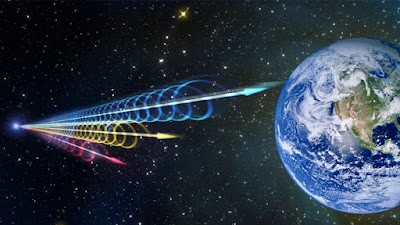

Tyrone O’Doherty, a Curtin University student, first noticed the enigmatic object while scanning the sky in rural Western Australia. “It’s exciting that the source I identified last year has turned out to be such a peculiar object,” stated O’Doherty in a press statement.

The object, which the scientists claim is unlike anything else they’ve observed, emits a tremendous beam of radiation that, every 20 minutes, shines brightly in the sky. It also spins and vanishes every minute.

Scientists refer to space objects that “turn” on and off in the night sky as “transients”.

“When studying transients, you’re watching the death of a massive star or the activity of the remnants it leaves behind,” said Dr. Gemma Anderson, an ICRAR-Curtin astrophysicist and co-author of the work.
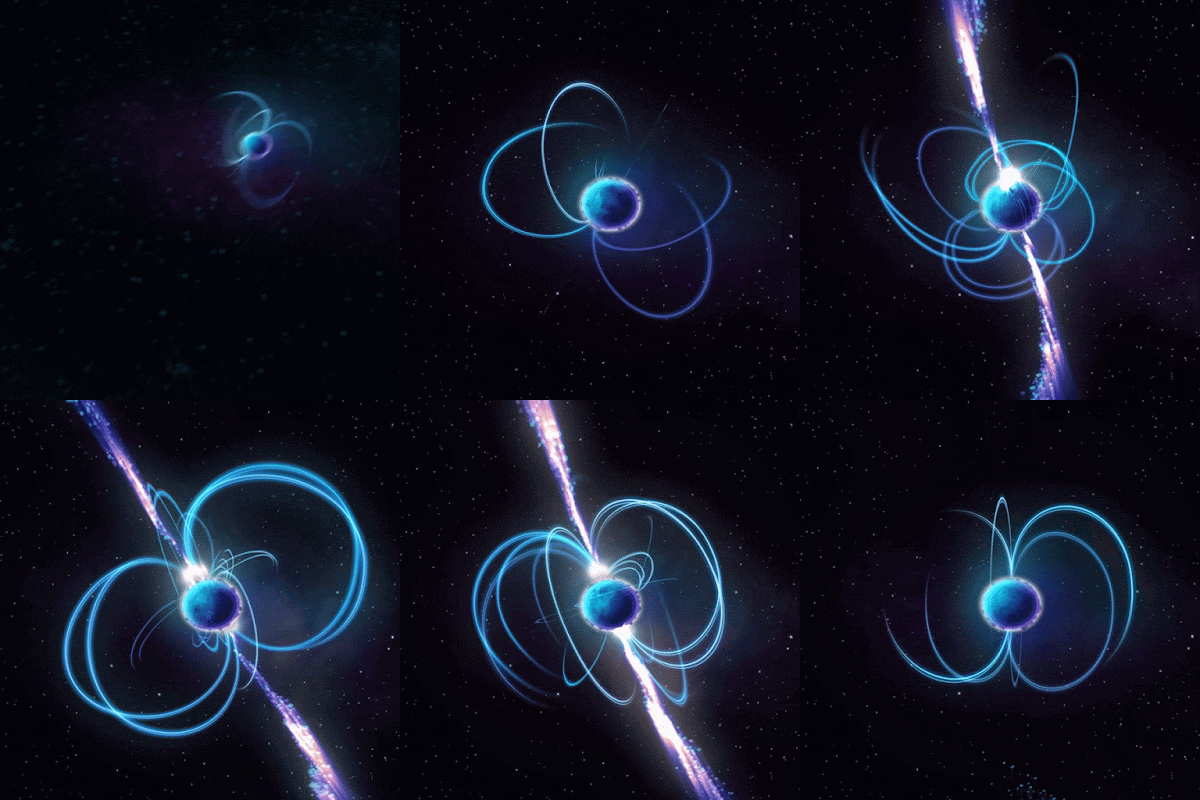
Slower transients, such as supernovae, might arrive in a matter of days and last for several months. Fast transients, such as neutron stars, “flash” on and off many times per second. However, transients between those two speeds are uncommon, and the current discovery is “really weird” and “completely unexpected.” according to the researchers.

“It was kind of spooky for an astronomer because there’s nothing known in the sky that does that,” said astrophysicist Dr. Natasha Hurley-Walker, who headed the research team. “And it’s really close to us – about 4000 lightyears distant. It’s there in our galaxy’s backyard.”

Hurley-Walker characterized the enigmatic object as being smaller than the sun yet brilliant, radiating highly polarized radio waves three times an hour. These radio pulses imply that it has an “extremely strong” magnetic field, which may correspond to a previously anticipated astrophysical object that has never been verified to exist. Scientists refer to the hypothetical item as an “ultra-long period magnetar.”

“It’s a type of slowly spinning neutron star that has been predicted to exist theoretically,” Hurley-Walker explained. “However, no one anticipated to immediately discover one like this since they were not thought to be that brilliant. It converts magnetic energy to radio waves considerably more efficiently than anything else we’ve seen previously.”

Astronomers believe it is a rare sort of neutron star or a collapsing white dwarf, but they need to examine it again to establish if it is a fluke or a new type of space object.


[ad_2]

Source link

KEEP THE CONVERSATION GOING

Share this story.

Facebook ↗X ↗
EXPLORE MORE

Keep reading.

Explore all news ↗
Best monitors 2026 — 4K monitor on a desk with vivid colour and cyan glow
Technology

Best Monitors 2026: 6 Picks for Work, Gaming and Creators in Canada

Read story ↗
Best gaming chairs 2026 — gaming chair in a dark gaming room with cyan glow
Technology

Best Gaming Chairs 2026: 6 Picks for Comfort, Posture and Long Sessions in Canada

Read story ↗
Best smart speakers 2026 — smart speaker in a modern living room
Technology

Best Smart Speakers 2026: 6 Picks for Sound, Smart Home Hubs and Every Ecosystem

Read story ↗